
Inquiry
Leave Your Message
Products Categories
Featured Products

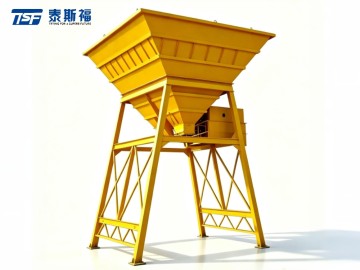
Mobile Receiving Hopper for Bulk Material Handling (Rail-Mounted or Rubber-Tyred Optional)

The Mobile Receiving Hopper is an advanced solution for bulk material handling in ports and terminals, designed to efficiently receive and transfer materials from grab cranes or ship unloaders to downstream conveying systems.

To meet diverse port infrastructures, this hopper offers flexible mobility options: it can be built as a rail-mounted system to move along fixed tracks, or as a highly maneuverable rubber-tyred (tyre-mounted) system for free movement across the dock. It is especially suitable for chemical material handling, including fertilizers, powders, and other bulk cargo requiring controlled and safe transfer.

Built with a high-quality coated structure, the hopper offers excellent corrosion resistance, ensuring durability in harsh environments. It is fully compliant with EU safety standards and EMC (Electromagnetic Compatibility) requirements, guaranteeing reliable and safe operation.

    Product Introduction

    ·Core Functions of the Receiving Hopper

    As a key component in port bulk handling systems, the receiving hopper is designed to collect, buffer, and regulate material flow during unloading operations.

    Efficiently receives bulk materials from grab cranes

    Reduces material impact and minimizes loss

    Ensures continuous and controlled discharge to conveyors

    Optional dust control system for environmentally friendly material handling

    Its optimized internal design improves material flow while preventing blockages, making it ideal for chemical bulk handling applications.


    ·Application in Port and Terminal Operations

    The mobile hopper plays a vital role in modern port equipment systems. It works in combination with quay cranes, grab unloaders, and belt conveyors to create a seamless unloading process.

    Compared to fixed hoppers, our mobile receiving hopper offers:

    Dual Mobility Options: Choose between Rail-Mounted or Rubber-Tyred designs based on your terminal layout.

    Greater flexibility across multiple unloading positions and reduced equipment idle time.

    Improved coordination with vessel operations.

    This makes it an essential solution for ports handling bulk cargo such as chemicals, minerals, and fertilizers.

    ·Efficiency Improvement in Bulk Handling

    Integrating a mobile receiving hopper system into port operations can significantly improve productivity.

    Increase unloading efficiency by 20%–35%

    Reduce downtime and repositioning delays

    Lower labor intensity through semi-automation

    Improve overall bulk material handling efficiency

    The robust coated structure also reduces maintenance needs, ensuring long-term cost savings and reliable performance.

    Key Advantages of Our Receiving Hopper

    Flexible Mobility: Available in both Rail-Mounted and Rubber-Tyred (Tyre-Mounted) configurations.

    1. Optimized for chemical material handling

    2. Fully compliant with EU safety and EMC standards

    3. High-efficiency bulk material receiving and transfer

    4. Integrated dust suppression for cleaner operations

    5. Durable coated structure for corrosion resistance

    6. Low maintenance and long service life


    Custom Receiving Hopper Solutions

    Customized Design to Meet Your Needs

    All our receiving hoppers for bulk material handling are custom-designed and manufactured based on your project requirements. We work closely with clients to define the optimal configuration according to material characteristics and operational conditions.

    Customization options include:

    Mobility Type: Rail-Mounted (fixed track) or Rubber-Tyred (free-moving).

    Hopper dimensions (length, width, height)

    Handling capacity and receiving volume

    Discharge outlet height and configuration

    Optional unloading ramps and auxiliary features

    Tailored Solutions for Maximum Efficiency

    Our mobile receiving hoppers are engineered to deliver maximum efficiency in real-world port operations. Whether for chemical bulk handling or other materials, each solution is designed to optimize workflow, enhance safety, and improve operational performance.

    Production Photos

    Receiving HopperReceiving Hopper for Port Handling Equipment

    FAQ

    Q1:What materials are your mobile receiving hoppers designed to handle?
    A: Our mobile hoppers are highly versatile and engineered to handle various bulk materials, including fertilizers, coal, iron ore, clinker, sulfur, grains, and chemical powders. We customize the hopper's inner lining and flow angle based on your specific material's density, abrasiveness, and moisture content. 

    Q2: How do I choose between a Rail-Mounted and a Rubber-Tyred (Tyre-Mounted) hopper?
    A: Rail-mounted hoppers are ideal for terminals with dedicated straight berths and pre-installed tracks, offering high stability and precise linear alignment. Rubber-tyred hoppers offer ultimate mobility and flexibility; they require no tracks, can steer freely, and can be easily towed or driven to different terminal zones or storage yards.

    Q3: Do your hoppers comply with European safety and electrical standards?
    A: Yes. All TSF mobile hoppers are designed and manufactured in strict compliance with EU safety directives and EMC (Electromagnetic Compatibility) standards, ensuring safe, reliable, and interference-free operation in busy port environments.

    Q4: What dust control options are available for eco-friendly operations?
    A: To minimize environmental impact, we offer integrated dust suppression systems. Options include mechanical dust-proof flex-flaps at the hopper inlet, dry fogging systems, and high-efficiency pulse-jet bag filter extraction units. These systems can capture up to 99% of airborne dust.

    Q5: Can the hopper handle highly corrosive materials like chemical fertilizers?
    A: Yes. For highly corrosive chemical bulk or salty marine environments, we offer heavy-duty C5-M marine-grade paint protection. Additionally, the product-contact zones can be constructed from stainless steel (304/316L) or lined with specialized low-friction, wear-resistant polymer liners.

    Q6: What power supply options do you support for both mobility types?
    A: Rail-mounted hoppers are typically powered via motorized cable reels connected to the shore grid. Rubber-tyred hoppers can also use cable reels for stationary work, but they are often integrated with an onboard diesel generator set to ensure full autonomy when traveling across the port.

    Q7: What are the customized options for your hopper systems?
    A: We offer 100% customized solutions. You can specify the mobility type (rail or tyre), hopper dimensions, holding capacity, discharge capacity (TPH), discharge gate type (hydraulic or pneumatic), and auxiliary features like magnetic separators, vibrators, or belt feeders.

    Q8: What is the typical lead time for a customized mobile receiving hopper?
    A: The standard lead time is generally between 16 to 24 weeks from final drawing approval to factory delivery. This varies depending on the structural scale, customized features, and component selection.

    Q9: Do you provide global on-site installation and commissioning support?
    A: Yes, we provide comprehensive technical services worldwide. We can dispatch a team of experienced field engineers to your terminal to supervise the mechanical assembly, electrical wiring, system commissioning, and load testing, as well as train your local operators.

    Q10: How can I request a technical proposal and quotation for my project?
    A: Simply contact our team with your basic requirements: target material type, bulk density, maximum grab crane bucket capacity, desired unloading rate (TPH), and your terminal's layout/clearance limits. Our engineers will provide a tailor-made proposal and quotation.

    description2

    Leave Your Message